Atmel Studio For Mac
for AVR® Development
CrossPack is a development environment for Atmel’s AVR® microcontrollers running on Apple’s Mac OS X, similar to AVR Studio on Windows. It consists of the GNU compiler suite, a C library for the AVR, the AVRDUDE uploader and several other useful tools.
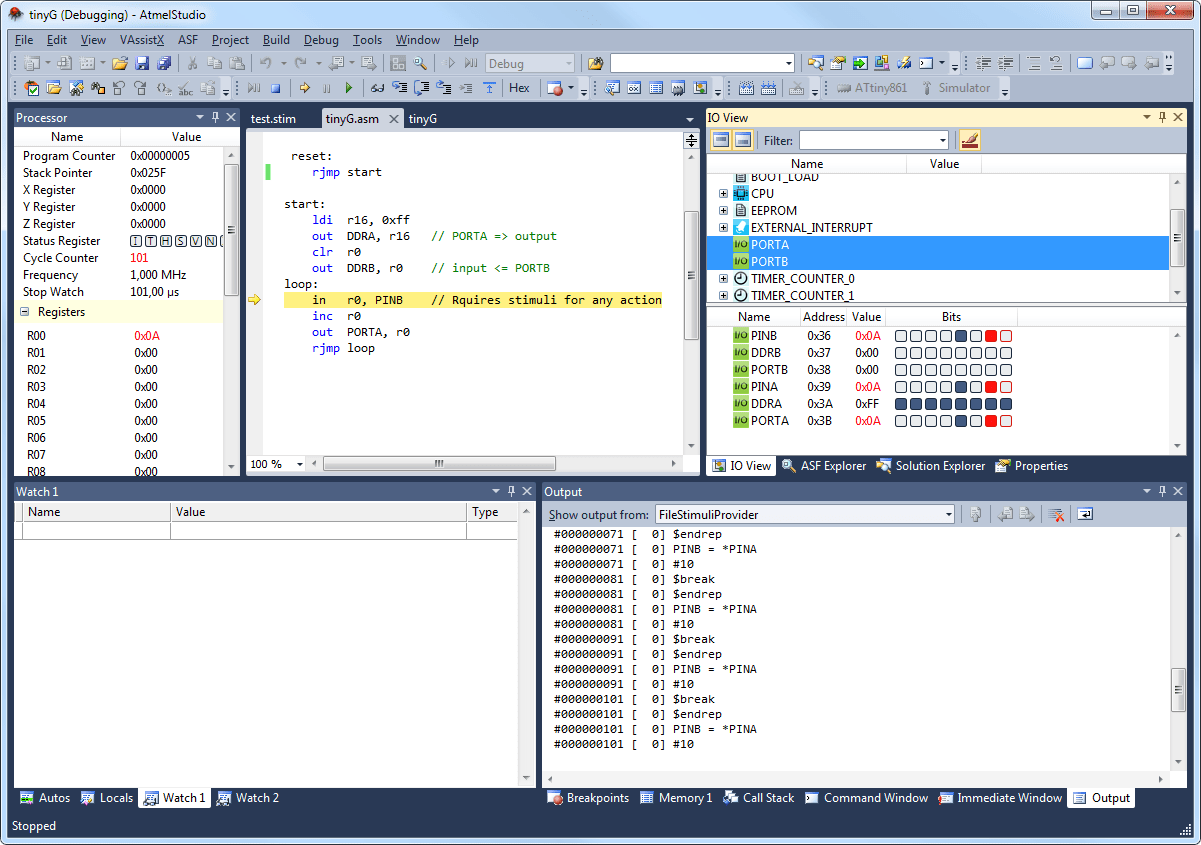
Now that Atmel Studio 7 has been released, *sigh* I'm very disappointed that there is no non-Windows version (OS X, Linux) of Atmel Studio. I suppose it's not surprising as Atmel Studio 7 is tied at the hips to Microsoft by the use of Visual Studio.
- Atmel® Studio 7 has been updated to use the 2015 version of the Visual Studio Shell, enhancing not only the look and feel of the integrated development environment (IDE) but also the performance when working with large projects.
- Hey guys, So I'm taking a software engineering course at the moment where they recommend the use of Atmel Studio, however; I'm on Linux and don't really want to setup a virtual machine (although if that's the only option, then I guess that will have to do).
Features
- Does not depend on Xcode for building AVR code.
- Runs on Mac OS X 10.6 and higher.
- Supports 8 bit AVR microcontrollers including XMEGA devices.
- Includes patches to gcc for new devices not yet supported by gcc's main distribution.
- Includes gdb for debugging with simulavr and avarice.
- You can create your own version of CrossPack AVR based on the build script available on github.com.
For a list of included software packages and versions see the Release Notes.
Mac Os Programming Tutorial
Getting Started
Since CrossPack consists of command line tools only (except the HTML manual which is linked to your Applications folder), you need to know some basic command names. So let’s demonstrate CrossPack with a trivial project, a blinking LED implemented on an ATMega8. This project is described in more detail in CrossPack’s manual.
The command avr-project creates a minimum firmware project which is configured for an ATMega8 with internal RC oscillator at 8 MHz. Now we have something to start with. We edit main.c and implement the blinking loop:
Now we compile the code and send it to the device:
Atmel Studio _bv Macro
That’s it. The LED should now blink. For a real project you should also edit Makefile to configure your uploader hardware (e.g. STK500, USBasp, AVR-Doper or similar), other source code modules, fuse options etc.