Using Visual Studio For Python Mac
Python on Windows with Visual Studio
Whilst I’m an OSX and Linux fan, Windows is a key operating system in any enterprise and developing network applications in a Windows environment is also an important topic to cover off. Visual Studio (VS) is a Windows IDE (Integrated Development Environment) which will also soon be available for OSX (at the time of writing, it isn’t released). Whilst I’ve brushed over this previously, this post is a quick guide on how to setup a very easy to use environment to play with Python. This is not however an in depth tool chain guide. This is a 101 post but will be enough for most people to get to grips with Python who use Windows. Let’s face it, you don’t really want to be sitting on the command line doing this do you and Eclipse is not to everyone’s taste, especially if you have prior experience coding with .net for instance.
Visual Studio for Mac wad Released, C# scripts are shared to some extent on Windows and Mac, We use WindowsForms GUI configuration on Windows and Cocoa on Mac. However, a problem occurred when running Terminal from System.Diagnostics.Process on Mac and running Python.
- Install the free version of Microsoft’s Visual Studio found here
- Install Python 3.x (or 2.x depending on your reasons) found here
- Install the Python tools for Visual Studion found here
I install both Python 2.x and 3.x as you never know what modules you might need that are version dependent.
What about environment variables so I can call Python from the command prompt?
Personally, I don’t bother putting Python in my environment path because of one reason; virtualenv! Virtualenv’s are self contained installations of Python where you can install whatever packages you need to without trashing your default installation of Python. It means if you mess up, you can destroy your Python environment and rebuild without affecting any other project (so long as each project has it’s own virtualenv!). Check out virtualenv here.
Next up, start Visual Studio. If you’ve installed both versions of Python, the Codeplex Python plugin will ask you which your default environment is. I normally go with 2.7. Hit “Make Default” and you’re now into coding territory.
What about installing Python modules?
With Python, we regularly install modules that we need in our coding. If you’re not ready to start exploring virtualenv’s yet, then feel free to install modules as you need them in to your default installation using something like the below:
C:Python27python-mpip install nxosNCRPC
Then switch back to Visual Studio and you should be set. The Completion database within Visual Studio that allows intellisense (and auto completion) to operate will need to rebuild, but have some fun with it and play.
Other Information…
In addition to using Visual Studio due to company politics, it’s also worth getting familiar with VS as you can run Python byte code on the Microsoft CLR – or common language runtime – that means from Microsoft C# (.net) you could call Python code. You might want to do this if you’re using Python for scripting in a C# application. Interesting eh? If this piques your interest, Google for ‘Iron Python’ and take a read!
As a closing statement, this is a 101 post. Python on Windows is not magic and despite it being associated with *nix, it works just fine.
Using Visual Studio For Python Machine
As a .NET developer, I’ve spent most of my time coding on Windows machines. It’s only logical: Visual Studio is the richest development experience for building C# and VB.NET applications, and it only runs on Windows…right?
When I joined Stormpath to work on our open-source .NET authentication library, I was handed a MacBook Pro and given an interesting challenge: can a Mac be an awesome .NET development platform?
To my surprise, the answer is yes! I’ll share how I turned a MacBook Pro into the ultimate Visual Studio development machine.
How to Run Visual Studio on a Mac
Visual Studio doesn’t run natively on OS X, so my first step was to get Windows running on my MacBook Pro. (If you want an editor that does run natively, Xamarin Studio or Visual Studio Code might fit the bill).
There are multiple options for running Windows on a Mac. Every Mac comes with Apple’s Boot Camp software, which helps you install Windows into a separate partition. To switch between OSes, you need to restart.
Parallels is a different animal: it runs Windows (or another guest OS) inside a virtual machine. This is convenient because you don’t have to restart your computer to switch over to Windows. Instead, Windows runs in an OS X application window.
I found that a combination of both worked best for me. I installed Windows into a Boot Camp partition first, and then turned that partition into an active Parallels virtual machine. This way, I have the option of using Windows in the virtual machine, or restarting to run Windows natively at full speed.
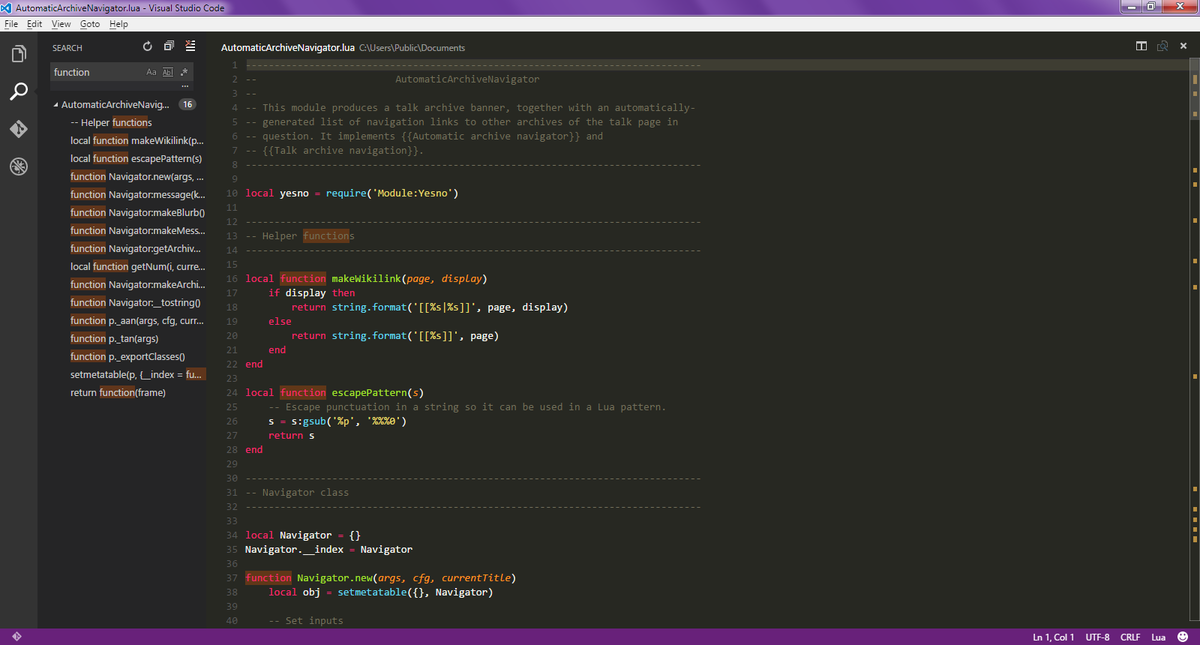
I was initially skeptical of the performance of a heavy application like Visual Studio running in a virtual machine. The option to restart to Windows via Boot Camp gave me a fallback in case Visual Studio was sluggish.
There are some minor disadvantages to this method: you can’t pause the virtual machine or save it to a snapshot. A non-Boot Camp virtual machine doesn’t have these limitations. This guide will work regardless of what type of virtual machine you create.
After three months of serious use, and some tweaks, I’ve been very impressed with Parallels’ performance. I haven’t needed to boot directly to Windows at all. (For comparison, my host machine is a 15” mid-2015 MacBook Pro with 16GB of RAM and a 1TB flash drive.)
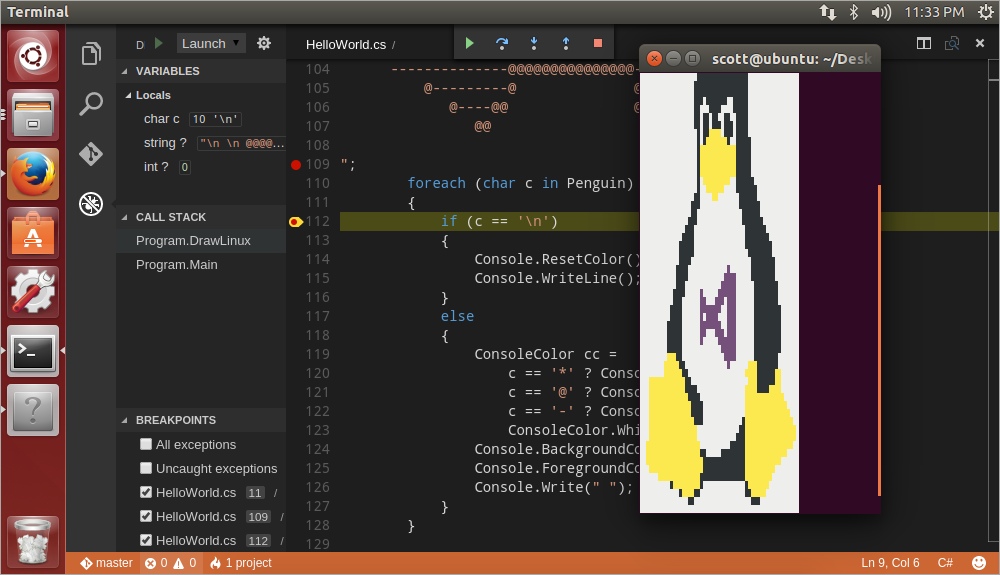
In the remainder of this guide, I’ll detail the steps I took to optimize both Parallels and Visual Studio to run at peak performance.
Installing Windows With Boot Camp and Parallels
This part’s easy. I followed Apple’s Boot Camp guide to install Windows in a separate partition.
Then, I installed Parallels and followed the Parallels Boot Camp guide to create a new virtual machine from the existing Boot Camp partition.
Tweaking Parallels for Performance and Usability
The Parallels team publishes guidelines on how to maximize the performance of your virtual machine. Here’s what I adopted:
Virtual machine settings:
Using Visual Studio For Python Mac Install
- 2 virtual CPUs
- 4096MB system memory
- 256MB graphics memory
Parallels options:
- Optimization: Faster virtual machine, Adaptive hypervisor, Tune Windows for speed all turned on.
- Sharing: Shared cloud, SmartMount, and Access Windows folders from Mac turned off, as I didn’t need these for my workflow.
I experimented with both of Parallels’ presentation modes, Coherence and Full Screen. While it was cool to see my Windows apps side-by-side with OS X in Coherence mode, I found that the UI responsiveness (especially opening and closing windows and dialogs) felt sluggish.
Because of this, I use Full Screen exclusively now. I have Windows full-screen on my external Thunderbolt display, and OS X on my laptop. If I need to use OS X on my large monitor, I can swipe the Magic Mouse to switch desktops.
Adjusting OS X and Windows Features
I fixed a few annoyances and performance drains right off the bat:
- Function keys. If you’re using the Mac keyboard, you’ll want to change the function key behavior so the F1-F12 keys work correctly in Visual Studio. From System Preferences – Keyboard, make sure Use all F1, F2, etc. keys as standard function keys is checked. With this turned on, hold Fn to use the Mac functions (brightness, volume, etc.) on F1-F12. With an external non-Mac keyboard, this isn’t an issue.
Start menu. I’m using Windows 8, and the removal of the Start menu annoyed me. I clung to my old ways and installed Start8 to restore it.
Disable Windows visual effects. I turned off most of the Windows desktop manager visual effects by going to Control Panel – System and Security – Advanced system settings – Advanced – Performance – Settings – Visual Effects and choosing Adjust for best performance. However, I left Smooth edges of screen fonts checked because it improves text rendering on my monitor.
Installing Visual Studio and Helpful Extensions
Installing Visual Studio is a piece of cake once the virtual machine is set up. I simply downloaded the latest release from MSDN and let the installer run.
Python Tools For Visual Studio
If you use an Apple Magic Mouse (as I do), Visual Studio tends to be overly eager to zoom the text size in and out as you swipe your finger over the mouse. The Disable Mouse Wheel Zoom add-on fixes this annoyance.
Improving Visual Studio for Performance
I was impressed with how well Visual Studio performed under emulation. With a large multi-project solution open, though, I saw some slowdowns.
Through trial and error, I found a number of things that could be disabled to improve performance. You may not want to make all of the changes I did, so pick and choose your own list of tweaks:
Using Visual Studio For C Programming
- Disable hardware-accelerated rendering. Unchecking Automatically adjust visual experience based on client performance, Enable rich client visual experience, and Use hardware graphics acceleration if available via Options – Environment made the UI feel much more responsive on my machine.
Start up to an empty environment. Starting up Visual Studio for the first time feels a lot snappier if you skip the default news page on startup. Select Empty environment under Options – Environment – Startup – At startup.
Remove unused extensions. Visual Studio ships with a number of extensions that you may not need. From Tools – Extensions and Updates – Installed, remove any extensions you aren’t actively using (you can always reinstall them later). I got rid of six extensions I didn’t need.
Disable extra debugging features. I turned off both Enable Diagnostic Tools while debugging and Show elapsed time PerfTip while debugging in Options – Debugging – General. I wasn’t using these debugging features, and debugging felt snappier after I disabled them.
Turn off the Navigation Bar. I found the code editor Navigation Bar to be unnecessary if the Solution Explorer is open. I disabled it via Options – Text Editor – All Languages – Navigation Bar.
Disable CodeLens. CodeLens is a cool feature for collaboration, but it’s not part of my current workflow. I got rid of the CPU overhead by turning it off via Options – Text Editor – All
Languages – CodeLens – Enable CodeLens.Turn off Track Changes. When a file is open in the code editor, Visual Studio will represent recent changes by displaying small regions of green or yellow on the scroll bar. If you can live without this, turn off Track changes via Options – Text Editor – General for a small performance boost.
Turn off Track Active Item. Squeeze out a little bit more UI performance out by ensuring Track Active Item in Solution Explorer is unchecked under Options – Projects and Solutions – General.
Python Development In Visual Studio
Visual Studio on a Mac: The Best of Both Worlds
With these tweaks, I’ve come to love using Visual Studio on a Mac. The performance is good, and by running Windows in a virtual machine, I get the best of both OS worlds.
Want to see what I’m building with this setup? Check out our open-source .NET SDK on Github.
Visual Studio Python Examples
Do you have any other tricks you’ve used to improve Visual Studio performance? Any must-have add-ons that boost your productivity? Leave me a comment below!