Why Mac For Recording Studio
 Choose studio monitors and headphones for your studio.
An iMac is a pretty capable system, but I wouldn't put one in a professional recording studio where I expected to have a lot of tracks and do a lot of post-processing. If your needs are going to be modest, you might get some tips for getting started here.
The speakers you use to listen to your mix during editing are called studio monitors (sometimes referred to as reference speakers). Studio monitors differ from other speakers in that they are meant to deliver a perfectly flat frequency response. This means that you are hearing your recording exactly as it exists digitally, without any frequency adjustment.- When choosing studio monitors, make sure to look for 'near-field' models. These are designed to be listened to from about a yard (1 m) away, and so eliminate any effects due to the acoustics of your room.
- Studio monitors can be purchased used from online classifieds sites or audio retailers. The robust, simple construction of loudspeakers makes them an ideal component to buy used and save money.
- In addition to or in place of monitors, you can buy a set of headphones. Headphones provide the advantage of being cheaper, smaller, and less likely to disturb a neighbor or housemate. Headphones can be used in conjunction with studio monitors to assess very low-volume components of your recordings.
Let’s clear one thing up, if you don’t want to buy a Mac then stop reading now. This article is not about the merits of Macs v PCs, been there, done that, got the t-shirt.
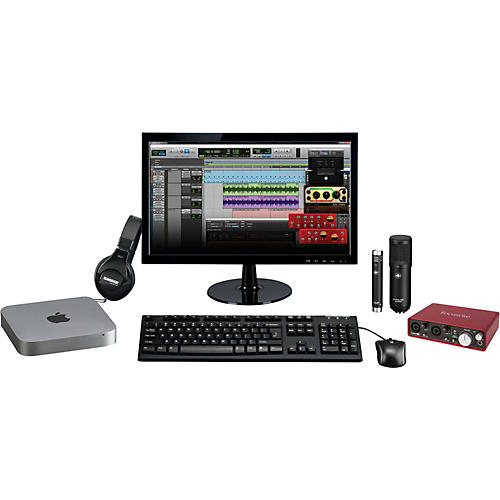
If you are thinking of building a home studio and want a Mac then you might be tempted to get a Mac Pro or full spec MacBook, but before you dive in don’t write off the Mac Mini.

I own a Mac Pro, a Mac Mini and a MacBook Pro, which gives me a unique view on the pros and cons of all three Macs. I have to say that the Mac Mini has a lot going for it for a home studio, here are my thoughts.
Connectivity
The Mac Mini has a lot of connectivity for the small footprint it has. Thunderbolt and 4 USB3 connectors. Firewire 800 was dropped for the Late 2014 model. Either way, this offers a comprehensive range of choice when considering an audio interface. Connectivity is also important for hard drives and other interfaces such as keyboards. One small thing to be aware of, in some cases USB3 creates issues and a hub is needed to make items such as iLok2s and some drives work. iLok3s are fine on USB3 ports.
One reason some people don’t even consider the Mac Mini is the lack of internal expansion, however, the Thunderbolt port allows for the use of expansion chassis, both Magma and Sonnet make solutions that can give users HDX and HD Native card connectivity, Avid also makes the HD Native Thunderbolt box that will connect to the Mac Mini.
Mac Mini Size
When building a home studio one thing to consider is size, the Mac Mini has one of the smallest footprints out there, so can sit on a desk and hardly be noticed.
Free Recording Software For Mac
Mac Mini Fan Noise In The Studio
Why Mac For Recording Studio
The Mac Mini is whisper quiet, in fact far quieter than the older Mac Pro silver tower. If you want to record through microphones in the same room as your computer then fan noise is an important consideration - I’m impressed by the lack of noise from the Mac Mini.
Why Mac For Recording Studio Near Me
Expansion Considerations
I’ve pimped my Late 2012 Mac Mini, installing 16GB of RAM and a Crucial SSD, both of these options cost around $300 and around 30 minutes to install. Now the little baby flies like a rocket.
Conclusion
Recording Studio App
Having run some tests my pimped Mac Mini can easily record 64 audio tracks in a single pass on a low buffer setting and play them back too with plug-ins installed. It may be Mini by name, but the performance of a Mac Mini belies its unassuming size.
Download Free Recording Studio Programs
If you are building a home project studio and want to take the Mac route then the Mac Mini is well worth consideration.